Odissi Dance in India
History of Odissi
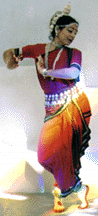 Odissi is an Indian classical dance form from the Eastern state of Orissa. It is one of India's oldest dance forms and it faced grave extinction during the British Raj. Its origins can be traced back to 2 century BC but the art started declining rapidly during the 17th century.
It is only during the last sixty to seventy years that the art form has been reinvented and revitalized. The art form is also extensively depicted in the sculptures of Brahmeswara temple and Sun Temple at Konark.
The odissi of today is sourced from Devadasi or Mahari tradition. It is a tradition that signified beautiful young women being consecrated to the Gods. They sang and performed in the temple signifying deep religious worship. Then there is also the Gotipua Naacha a tradition that involves young boys dressing up as women and performing to the devotional poems of the Vaishnava poets. Then there is also the Nartaki tradition which followed the tradition of performances done in the royal courts of kingdoms.
Odissi Theme & Technique
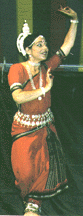 The themes of Odissi are usually based on Lord Krishna. The Ashtapadi of Jayadeva is another very common theme. Odissi arft form centers on spirituality and devotion of its artists to the gods.
Odissi artform follows the basic rules of the Natyashastra and the Silpasastra styles in its techniques. One of the more characteristic features of Odissi is the Tribhangi. Tribhang divides the body into three parts, head, bust, and torso.
Any posture in the dance form that signifies or deals with these three elements is called tribhangi. It is also the is the feminine curvaceous sculptural position with the body weight on one foot. Hence the dance form creates the illusion as if the sculpture is just coming to life.These kind of isolated torso movements are a typical feature of odissi creating the eternal 'S' pattern.
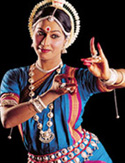
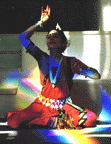 The mudras are also important. The term mudra means "stamp" and is a hand position which signifies several meanings. Each mudras has its own meaning and connotation which helps to explain and take the story forward.
The dance form lays a lot of importance to facial expressions. It also has vigorous movements that makes it possible for the dancer to look emotional and exhausted. Hence this kind of style helps to maintain a mental and spiritual aspect to the dance form.
Odissi Costume
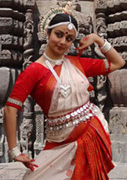 In Odissi the costume is usually a stitched pyjama specially made from silk and is draped around the person. While the women wear sarees which are woven in silk and have intricate designs with special borders on them. They also uses silver jewellery. Ornaments like anklets, bells, bracelets earrings and necklaces all are used. The hair is tied into neat bun and then decorated with a flower garland.
Odissi Music
 Today the orchestra consists of the Guru who mostly is also the pakhawaj player accompanied with one or two vocalists. There are a number of other instruments that can be used like the manjira, sitara or the tanpura.
Some of the icons in Odissi artform are Pankaj Charan Das, Guru Deba Prasad Das, Guru Raghunath Dutta, Madhavi Mudgal, Rekha Tandon and Sreyashi Dey.