Modern Indian Painting
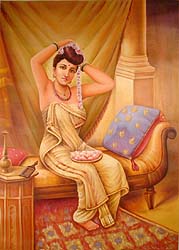 Modern painting in India can trace its roots to pre independence India when western influences started to make an impact in Indian art. Painters drew inspiration from the Western schools and used western principles and techniques in their paintings. Raja ravi Verma is a perfect example who used to western techniques to make paintings based on Indian subjects, mostly seeped in Hindu Mythology. Raja Ravi Verma is one o the greatest painters this nation has produced. He was the first great modern painter in India who single handedly changed the Indian painting landscape. He even won the gold medal at Vienna for his painting 'Nair Lady Adorning Her Hair'.
An artist like Jamini Roy was trained in European style oil painting. He drew inspiration from styles such as Kalighat paintings which were defined by the use of majestic brush strokes. He would visit rural places and learn from traditional masters in the end developing his own style.
Francis Newton Souza on the other hand founded the Bombay Progressive Artists Group. This was done to promote the international avant garde movement in Indian painting. He later left for London to become a rich and well recognized star. His autobiographical book called Nirvana of a Maggot further helped create awareness about modern Indian oil painting.
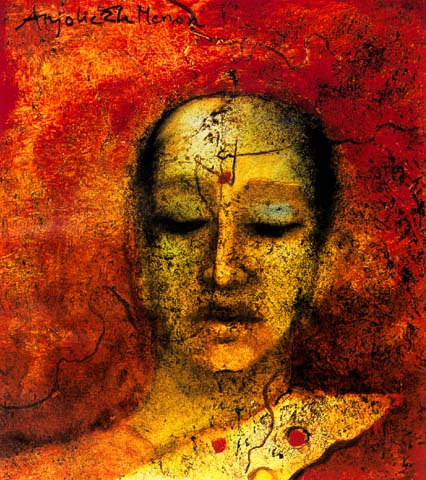 Soon art began to evolve and flourish. It no longer was solely under the clutches of tradition, religion or culture. New themes were now being explored. Like humanity, sexuality, liberty, nudity, passion, patriotism etc. People learn to mix and match colours to create abstract designs.
The names in the modern Indian painting include several other big names like Nandlal Bose, Devi Prasad Roy, Sarada Charan Ukil, Asit Kumar Haldar and Jamini Roy. These artists took Indian paintings to a different level where class and expression reigned supreme.
One of the major characteristic of contemporary Indian Painting is that the technique and methods acquired new importance. With this new insight the painter has now gained a great deal on the visual and sensory level: particularly in regard to the use of colour, concept of design and structure, texture, and the know how of how to employ unconventional materials. Art on the whole acquired an autonomy of its own and the artists as individuals began to flourish with various themes, techniques and aesthetic boundaries.
Indian Art today is big market segment. It has produced some world class artists whose paintings rake in a lot of money. Among the contemporary artists some of the famous artists are MF Hussain, Tyeb Mehta, Anjloie Menon, John Wilkins, Sadanand Bakre etc.