Union Budget 2020-21 [New]
The Union Budget of India also referred to as the Annual Financial Statement in the Article 112 of the Constitution of India, is the annual budget of the Republic of India. The Government presents it on the first day of February so that it could be materialized..
Read More »
Indian Economy
Indian economy is ranked as the ninth(9th) largest in the world in terms of currency conversion and fourth largest in terms of purchasing power parity. The country is one of the G-20 major economies and a member of BRICS, and ASEAN. India is the seventeenth largest exporter and eleventh largest importer in the world.
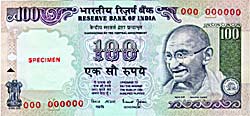 The Indian economy depends much on agriculture, which now contributes to less than 25% of the GDP. Other important industries are mining, petroleum, diamond polishing, films, textiles, information technology services, and handicrafts. Most of India's industrial regions are centred around major cities. Now India has emerged as one of the largest players in software and business process outsourcing services. There are also a lot of small-scale industries that provide steady employment to many of its citizens in small towns and villages. Tourism Sector is also an important contributor to the Indian Economy.
India's major trading partners are the United States, Japan, China and the United Arab Emirates. India's main exports items include agricultural products, textile goods, gems and jewellery, software services and technology, engineering goods, chemicals and leather products while its main import commodities are crude oil, machinery, gems, fertiliser, chemicals.
Tax saving on HRA when living with Parents
Saving Income tax is main concern of all taxpayers. House rent allowance is the most effectualpart of tax saving.House Rent Allowance is a constituent of employee's salary package. This allowance is given by an employer to an employee to meet the cost of renting an accommodation. House Rent Allowance is exempted from Income Tax under section 10(13A) of the Income tax Act, 1961 and Rule 2 of Income Tax Rules.
In fact, the simplest way of saving tax is by investing through parents and children. If employee invest in correct way, the rate of return may be higher as well. Employee's parents can also help bring down his tax liability in numerous ways.
Employees generally receive a house rent allowance from their employers. This is a part of the salary package, in agreement with the terms and conditions of employment. House Rent Allowance is given to meet the cost of a rented house taken by the employee for his stay.
The Income Tax Act allows for deduction in respect of the HRA paid to employees. It is established that the total HRA is not deductible. HRA is an allowance and is subject to income tax.
There are some minimum conditions to claim tax rebate from HRA:
- Employee should be staying in a rented accommodation.
- The house should not be owned by employee.
- Employee should be paying the rent.
- This rent must be in excess of 10% of salary (salary, in this case, includes Employee's basic salary + dearness allowance).
- 50% of your basic salary if you live in a metro or 40% of your basic salary if you live in a non-metro
If these conditions are fulfilled, the HRA will be beneficial for employees.
The rented premises must not be owned by him. In case one stays in an own house, nothing is deductible and the entire amount of HRA received is subject to tax.
Salary means basic salary which includes dearness allowance if the terms of employment provide for it, and commission based on a fixed percentage of turnover achieved by the employee. The deduction will be available only for the period during which the rented house is occupied by the employee and not for any period after that.
Meaning of Salary for calculation the tax exemption of HRA.
Salary means (Basic + D.A + Commission based on fixed percentage on turnover).
Salary is to be taken on due basis in respect of the period during which accommodation is occupied by the employee in the previous year.
When employee staying with parents, it is very much permissible under Income Tax Act provided property is registered in the name of parent/s.If individual is residing in a house owned by his parents and he is paying rent to them, technically, they are the landlords. Therefore, employee could, thus, claim an exemption, provided they show the same transaction in their income tax returns.
Rent to spouse is not permissible, as a husband and wife relationship is not considered moneymaking. Spouses are intended to stay together.
Tips for making budget in Indian wedding
Indian wedding has too many celebrations from start to finish.Indian weddings are usually big because of large families, and lots of family friends. It can be said that Marriages in India are fullof ritual and celebration that continue for several days....
More »
Tips to avoid credit card frauds
We are breathing in an environment where fraudulent can attack any time whether it is the virtual or the physical world. People must be aware of these frauds and take precautions specially when making financial transactions through credit card...
More »
What is virtual credit card and how to create it?
In technological advancement era, virtual credit cards are the best alternatives for credit and debit card holders to prevent from phishing and other internet frauds...
More »
Safety measures for internet banking
The Internet has made revolutionary changes in the life of people around the world, this witnesses the waythey interact with other people and conduct business...
More »
Trends in Two Wheeler market in India
India is ranked second in manufacturing and producing of two-wheelers in the world. There is high demand of two wheeler vehicles...
More »
Trends in Indian Car Market
The automotive industry in India is expanding due to huge demand of passenger cars. The car makers do survey to know the needs of customer and accordingly introduce new features in cars...
More »
Retirement Schemes for Working Indians
Retired population is growing at a rapid pace in India. Such people are worried about their future after retirement....
More »
Short Term and Long-Term Investment Options
India is emerging as the fastest economy in the world. Financial experts say that investment is directly linked with the financial system of the country. So investors are always searching for rising markets where the growth rate is high...
More »
Wise Planning of EMI
People have big plans for purchasing house. They do everything to get good accommodation for modern living....
More »
Pollution disrupts the economic growth
Pollution in India is high as compared to other nations and is a serious concern for the environmentalists in the country....
More »
Growing property market of Bhopal, Madhya Pradesh enhances the economy of state
People from all over the world invest in property to increase their wealth and secure life for future. Property market of Bhopal is emerging rapidly...
More »
Inflation worry in India
The Indian economy is severely threatened by the price rise of most of the commodities in the current year of 2013 which put a heavy financial burden on the consumers....
More »
Variables nature of gold Price in 2013
Indian populace has more inclination towards the gold metal than any other nationals on this planet. The purpose is mainly to buy jewellery or to buy for investment purpose or many times....
More »
Elements of Foreign Exchange method for trading
In a competitive global business environment, everyone must know the basic process of foreign exchange.....
More »
Rupee fall: threat to Indian economy
Indian economy is endangered by sudden fall of rupee per dollar. This decrement trend is not the western policies or some international pressures but it the outcome of monetary...
More »
 |
|