Daily Life in Ancient India
Daily Life In Ancient IndiaThe daily life of the people of ancient India is based on the excavated sites, inscriptions and the religious text book written.
They provide glimpses of the life style prevalent during that time and help in constructing a near authentic picture of the daily life in ancient India.
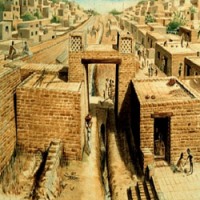
The daily life of the Indus valley civilization that flourished between 3000-2500 BC can be traced from the remains of the ancient sites of the Harappa and Mohenjodaro cities that were discovered by the archaeologists in 1922.
In these cities, houses were found to be made of baked brick and the houses had flat roofs. The houses were single or double storied with courtyard having well and bathrooms.
The cities had streets with well-connected drainage system. It had a large central storage building for grain. The discovery of public swimming pool leads to infer that religious bathing was common during that time. The smaller rooms and pools were dressing rooms and private baths for the important people of the town.
Ancient Indian Daily Life in Indus Valley Civilization
The people of the Indus valley civilization eat vegetarian and non vegetarian food. They eat wheat, barley, dates and vegetables. They domesticated animals for their meat that included sheep, pigs, zebus (a kind of cow), and water buffalos. Their diet included fish which they caught from the rivers using fishing rods with hooks.
The people of Indus valley wore colorful robes, with women wearing gold and precious stone jewelry. The dancing figure reveals that people loved dancing and singing. The children used to play with small carts, toys shaped as birds, monkeys etc are found from the excavated sites.
The Indus people were excellent craftsmen. They were skilled potters and weavers. The artifacts discovered suggest they could produce exquisite pieces of craftwork. They also excelled in the metal work.
The Indus people used wooden carts with wheels for transportation. They also used boats and ships to carry out trade. Pictographic seals have been found proving trade links between Indus Valley and Mesopotamian civilization.
Indo-Aryan people
Ancient Indian Daily Life in Indo Aryan People
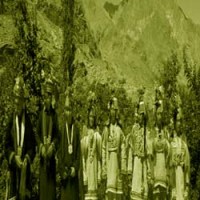
The arrival of the Indo-Aryan people from central Asia and beyond and their settling down in north Indian planes marks the beginning of the Vedic Age. This Vedic age roughly covers the period from 1500 BC to 600 BC.
The information about the daily life of Aryan people could be inferred from the Vedas that was written over a period of time. Further books like the Upnisahds, the Puranas, the Mahabharta and Ramayna written in the later period; contain description of people’s life, rituals, beliefs, wars and other achievements.
The Aryan people lived in houses made from wood and straw. Their life centered on a community fire place, called Yagna. Here people used to meet and share their life together. Their religious life centered on many gods and goddesses.
Ancient Indian Daily Life in Vedic Period
In the earlier Vedic period, the tribes were called ‘Gana’ which had a chief and this was a hereditary title that passed from father to son. The Aryans people started growing cotton and from that they weaved clothes. The dress was almost same for both the sexes. Men usually wrapped cloth around their waist and covered their lower part of the body. The upper part was uncovered but they wore headdress.
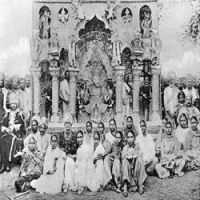
Women shoes and jewels Women wore two piece of clothing. A length of cloth was wrapped around the lower part and a loose fitting cloth covered the upper part. Later women started wearing skirt (a large wrap around waist and below), with loose tops (cholis) with headdress. Rich women used to wear jewels and leather shoes. Women wore jewelry made from gold, precious stones and shells.
The Aryan people eat meat, vegetables and fish. They were the first to introduce horse and chariot in India. Their favorite pastime was to gambling, telling stories and fighting. Children studied under gurus in Gurukuls. The education was orally transmitted to them with emphasis on memory.
This period also saw the beginning of caste system. It was based on the division of occupation. Earlier, there was social mobility in the caste system but later it became rigid. A person's occupation depended upon his birth and the son was forced to take up his father's occupation.
Ancient Daily Life of Hindu People
After the Vedic period, there was the rise of the Mahajanapadas or states. It’s about this time Hinduism took roots and with Brahmin priests dominating, the religion become ritualistic with emphasis on sacrifices. Henceforth, religion becomes the reference point for everything guiding the life.
It was also the period when Ashrams became the place for learning. Ashrama life was tough for the children. They were required to do everything on their own apart from studies.
The houses were made from wood, straw and bamboo with several rooms and balconies. The use of iron and copper were found in utility items for daily use and deities for worship.
The state paid the people for welfare projects like building of roads and other public works. The city streets in that time were narrow with shops dominating both sides.
People eat vegetarian and non- vegetarian food. The influence of Jainism and Buddhism made them change their food habits and since then they eat more vegetables, fruits and milk.
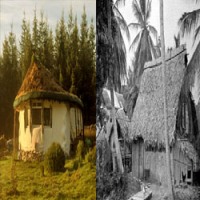
Houses made wood and strawMen used to wear dhoti that was nine meter long. It was wrapped around the waist, with some of its parts covering the upper part of the body. They also wore leather shoes with thick soles.
Women used to wear bright colored two part clothing with lot of jewelry. It included armbands, necklaces, waist belts, leg and ankle bangles, earrings, nose rings and crowns for the rich women.
The most popular form of marriage was Swayamvara, where number of suitable grooms assembled at the bride’s house and she chose from them her husband. The other types of marriages were Gandharva and Asura Viviha.
Men used to play chess, polo and cards. Martial arts including fencing, wrestling was very popular among them. They used to go for hunting in their free time.
There was a tremendous development in the life style of people during the Gupta Empire (320 AD-500 AD) that covered most of north India.
During the Gupta rule there was an unprecedented peace and prosperity. There was religious freedom and great emphasis on education. This led to advancement in arts, music, science and in other walks of life.
Contribute More Facts